


Multiple Sclerosis (MS) is an immune-mediated inflammatory demyelinating disease of the central nervous system (CNS). Its pathogenesis has not been fully elucidated, and is likely associated with genetics, environmental factors, viral infections and other triggers. Predominantly affecting young and middle-aged adults aged 20 to 40, it ranks among the most common disabling neurological diseases in young adults worldwide, excluding traumatic disorders.
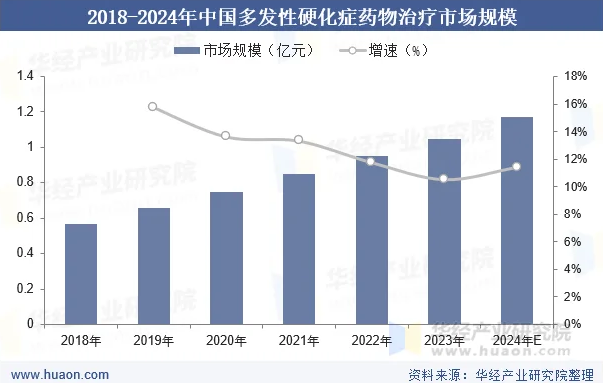
The number of MS patients in China has risen year by year, driving growing demand for therapeutic drugs and expanding market size. Statistics show that the patient population increased from 33,300 in 2018 to 49,900 in 2023, while the market for MS medications reached approximately 105 million yuan in 2023.
According to the Chinese Guidelines for the Diagnosis and Treatment of Multiple Sclerosis (2023 Edition), the therapeutic goals for MS are to fully control inflammatory activity, slow disability progression, relieve clinical symptoms, facilitate nerve repair and improve patients' quality of life. A variety of drugs with distinct mechanisms of action have been approved for clinical use, categorized as follows:
• S1P receptor modulators: By regulating sphingosine-1-phosphate (S1P) receptors, these agents block lymphocyte egress from lymph nodes and reduce their infiltration into the CNS, thereby alleviating inflammation. Representative drugs include fingolimod hydrochloride, siponimod and ozanimod.
• Anti-CD20 monoclonal antibodies: They target the CD20 antigen on B cells to eliminate B lymphocytes and mitigate B cell-mediated immune attacks. Ofatumumab is a fully human anti-CD20 monoclonal antibody (IgG1).
• Fumarates: These agents exert immunomodulatory and cytoprotective effects by activating the Nrf2 pathway to reduce oxidative stress and inflammation.
• Pyrimidine synthesis inhibitors: They inhibit dihydroorotate dehydrogenase to suppress lymphocyte proliferation and produce immunosuppressive effects.
• Other immunomodulators: These drugs regulate immunity in both the peripheral and central nervous systems. Their mechanisms remain incompletely understood, which may involve inducing regulatory T cells and inhibiting the activation of pathogenic T cells.
Accelerated R&D: Major Progress of Multiple Investigational Drugs
The MS treatment pipeline is currently witnessing vigorous and diversified innovation. BTK inhibitors, originally developed for oncology, have demonstrated promising potential for repurposing. Several candidates including orelabrutinib from I-Mab and remibrutinib from Hansoh Pharma have advanced to Phase III clinical trials. Therapies such as CAR-T cells, monoclonal antibodies and stem cells are also advancing steadily, with some candidates entering clinical stages and bringing new potential treatment options for MS.
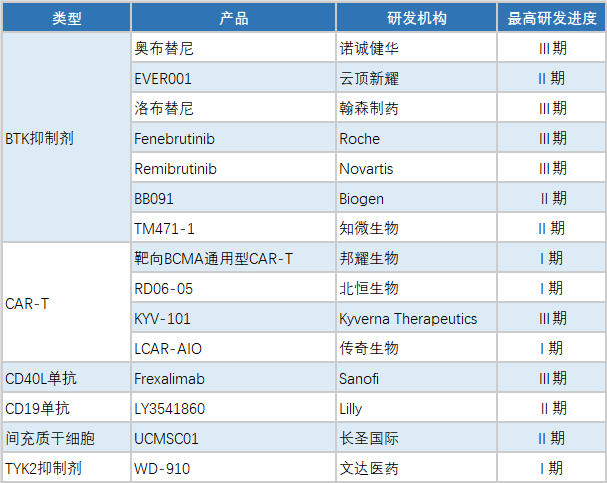
Selected Investigational MS Drugs and R&D Progress
Kylin Lab Empowers R&D of CNS Drugs
Kylin Lad specializes in preclinical CRO services for central nervous system drug development, with a comprehensive CNS research platform in place. We possess well-established in vitro screening assays and animal disease models, integrated with technical platforms covering behavioral analysis, electrophysiology, biomarker assessment, AI-powered phenotypic screening, multi-dimensional surgery and imaging technologies.

Reference:
中华医学会神经病学分会神经免疫学组. 多发性硬化诊断与治疗中国指南(2023版) [J] . 中华神经科杂志, 2024, 57(1) : 10-23.
《多发性硬化:百亿美金市场,BTKi发展前景广阔 ——行业深度报告》开源证券
《2025年中国多发性硬化症药物治疗行业市场调查研究报告》华经产业研究院
Kylin Lab
CNSxplore | Pioneering CNS Drug Discovery--In vitro and in vivo, Beyond limits
Kylin Lab is a preclinical CRO company specializing in central nervous system (CNS) diseases, dedicated to offering one stop solutions for CNS drug discovery. With a portfolio of fully-validated cellular and animal disease models, combined with comprehensive research and analytical capabilities, we empower clients to accelerate the development of innovative therapies and reduce clinical trial risks.
Kylin Lab boasts an experienced technical team well-versed in international regulations, along with high-standard experimental platforms. Our core technologies include AI-driven phenotypic screening, humanized stem cells and organoids, electrophysiology, high-throughput electroencephalography (EEG), histology, and molecular biology. Our expertise spans a broad range of areas including Alzheimer’s disease, Parkinson’s disease, depression, schizophrenia, spinal muscular atrophy (SMA), pain, and stroke etc.
Since its establishment, Kylin Lab has adhered to the philosophy of “Pioneering R&D, Leading in technology Quality-first, Customer-centric.” We have served hundreds of clients, successfully completed numerous thematic research projects and IND submissions, and established a high-quality, stable, and forward-looking efficacy evaluation system.