The greatest challenge in pre‑clinical research on bipolar disorder (BD) lies not in reproducing a single symptom, but in simulating both manic and depressive poles simultaneously, as well as capturing mood switching and cognitive risks. Evaluation should not focus merely on antidepressant or anti‑manic effects; instead, it should assess whether mood stabilizers can ameliorate phenotypic manifestations of both poles, prevent mood‑switch induction, and be supported by multi‑dimensional evidence.

Selection of Pre‑clinical Animal Models for Bipolar Disorder
Different from pure depression‑only or mania‑only models, mainstream BD models fall into these major categories:
Amphetamine‑induced mania model
Animals exhibit hyperactivity, increased risk‑taking behaviour and reduced sleep, which can be reversed by lithium and valproate. This model is often combined with chronic stress to induce depressive phenotypes for the evaluation of mixed episodes.
Environment‑induced models
Sleep deprivation elicits mania‑like phenotypes. When combined with chronic unpredictable mild stress, a paradigm of alternating episodes can be established, which mimics the rhythm disturbance observed in bipolar patients.
Gene‑edited models
Clock‑mutant, DAT‑knockdown and Myshkin mice: spontaneous hyperactivity, heightened reward sensitivity and reduced anxiety. Some strains display bipolar‑like mood fluctuations, making them suitable for long‑term pharmacodynamic assessment and target validation.

Pharmacodynamic Evaluation Protocol: Multi‑dimensional Assessment
The core feature of BD is cyclic transitions among mania, depression and euthymia. However, existing animal models can almost only replicate unidirectional phenotypes. Model evaluation in the field is mainly performed from three validity dimensions:
Assessment of mania‑like symptoms
Open‑field test (OFT): evaluates hyper‑locomotion and enhanced exploratory behaviour, serving as a core indicator of hyperactivity.
Assessment of depression‑like symptoms
Forced swimming test: immobility duration is recorded to assess behavioural despair.
Sucrose preference test: detects anhedonia, a hallmark indicator of depressive episodes.
Assessment of cognitive impairment
Y‑maze spontaneous alternation test: evaluates spatial working memory.
Morris water maze / Barnes maze: evaluates spatial learning and memory.
Beyond behavioural assays, pre‑clinical studies may simultaneously measure brain neurotransmitters (dopamine, glutamate, GABA), BDNF, inflammatory factors, electroencephalography and circadian rhythm to generate multi‑omics evidence integrating behaviour, molecular biology and electrophysiology.
•Peripheral biomarkers: BDNF, HPA‑axis components, inflammatory factors (IL‑6, TNF‑α).
•Central pathway biomarkers: GSK‑3β, β‑catenin, glutamate‑related pathways.
•Electrophysiological biomarkers: hippocampal LTP, EEG theta oscillations.

Progress in New Drugs for BD
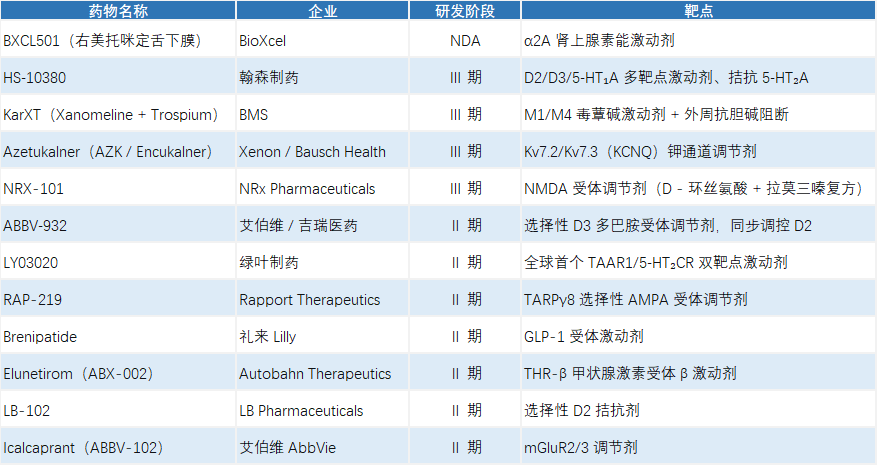
Pipeline BD candidate drugs are sorted by development stage, covering novel targets and innovative delivery strategies.

Kylin Lab’s Capabilities in BD Model Establishment and Detection
Kylin Lab performs bipolar disorder model construction and post-dosing pharmacodynamic assessment, providing supportive pharmacodynamic evidence for preclinical evaluation of BD drug candidates. Customized evaluation protocols for manic-like, depressive-like or combined bipolar pharmacodynamics can be developed according to the target mechanism of candidate compounds.
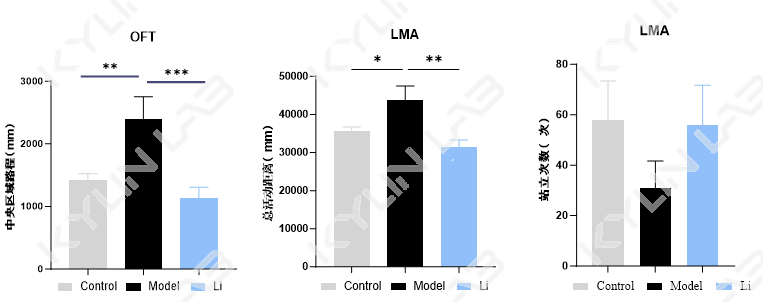
Results from the OFT and LMA tests show that mice in the model group displayed markedly increased total travel distance, presenting manic-like behaviors consistent with experimental expectations, while rearing frequency showed a declining trend. The total travel distance of mice in the lithium carbonate group was significantly lower than that of the model group.
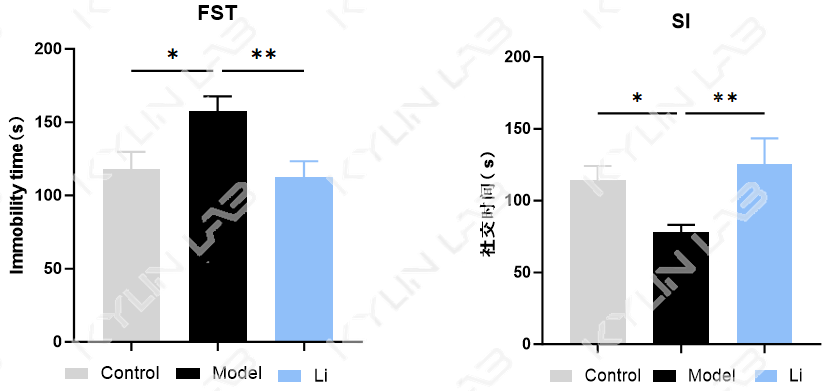
Data from forced swim test and social interaction test demonstrated obvious depressive-like behaviors and social avoidance in model mice. Lithium ions effectively alleviated these behavioral abnormalities.

Sourse:
https://mp.weixin.qq.com/s/C__gGojkWkx58r-oTwdgkA
PatSnap Database
KylinLab
CNSxplore | Pioneering CNS Drug Discovery--In vitro and in vivo, Beyond limits
Kylin Lab is a preclinical CRO company specializing in central nervous system (CNS) diseases, dedicated to offering one stop solutions for CNS drug discovery. With a portfolio of fully-validated cellular and animal disease models, combined with comprehensive research and analytical capabilities, we empower clients to accelerate the development of innovative therapies and reduce clinical trial risks.
Kylin Lab boasts an experienced technical team well-versed in international regulations, along with high-standard experimental platforms. Our core technologies include AI-driven phenotypic screening, humanized stem cells and organoids, electrophysiology, high-throughput electroencephalography (EEG), histology, and molecular biology. Our expertise spans a broad range of areas including Alzheimer’s disease, Parkinson’s disease, depression, schizophrenia, spinal muscular atrophy (SMA), pain, and stroke etc.
Since its establishment, Kylin Lab has adhered to the philosophy of “Pioneering R&D, Leading in technology Quality-first, Customer-centric.” We have served hundreds of clients, successfully completed numerous thematic research projects and IND submissions, and established a high-quality, stable, and forward-looking efficacy evaluation system.