
There are approximately 50 million people living with epilepsy worldwide, with nearly 10 million patients in China and around 400,000 new cases annually. While current anti-epileptic drugs can control partial seizures, roughly 30% of patients develop drug-resistant epilepsy. These patients suffer long-term issues including cognitive impairment, elevated sudden unexpected death risk and deteriorated quality of life. Such huge unmet clinical needs are pushing global new drug research and development teams to continuously explore innovative breakthrough directions.
Hot Targets in New Drug Research & Development
Targets for next-generation anti-epileptic drugs no longer generally inhibit overall neuronal excitability. Instead, they achieve precise regulation across multiple pathways including ion channels, neurotransmitter receptors, genes and metabolic enzymes.
Kv7.2/7.3 Potassium Channels
They suppress hyperexcitability at the upstream level by boosting the M-current, stabilizing neuronal resting membrane potential and raising the firing threshold. New-generation selective openers markedly reduce off-target effects, feature broader-spectrum therapeutic potential and demonstrate greatly improved tolerability.
Nav1.6/Nav1.2 Sodium Channels
They selectively block abnormal high-frequency firing of central neurons while sparing sodium channel subtypes expressed in the heart and skeletal muscles. This enables precise seizure suppression while preserving normal neurological function, and mitigates safety risks related to cardiac function and motor coordination.
5-HT2A/2C Receptors
Activation of 5-HT receptors strengthens inhibitory neurotransmission in the brain, controlling epileptic seizures and meanwhile alleviating common comorbidities such as depression and anxiety.
SCN1A/SCN2A Genes
Targeting monogenic pathogenic origins, gene therapies such as antisense oligonucleotides upregulate the function of key sodium channels to correct the expression level of pathogenic proteins. As disease-modifying interventions, they hold promise to alter the natural progression of epileptic encephalopathy.
GABAA Receptors
Positive allosteric modulation of GABAA receptors facilitates inhibitory chloride influx to deliver rapid anticonvulsant effects. Subtype-selective modulators or neuroactive steroids can mechanistically separate therapeutic efficacy from sedation and drug tolerance, delivering sustained, safer enhancement of inhibitory signaling.
CH24H Enzyme
Inhibiting cerebral cholesterol metabolism cuts down excitatory metabolites and relieves the inhibition exerted on GABAA receptors, restoring the excitation-inhibition balance via a dual regulatory mechanism. With no direct sedative effect, it represents a novel non-sedative therapeutic option for drug-resistant epilepsy.
R&D pipelines covering the above targets span the full lifecycle from early target discovery to NDA submission, with continuous deepening of research depth.
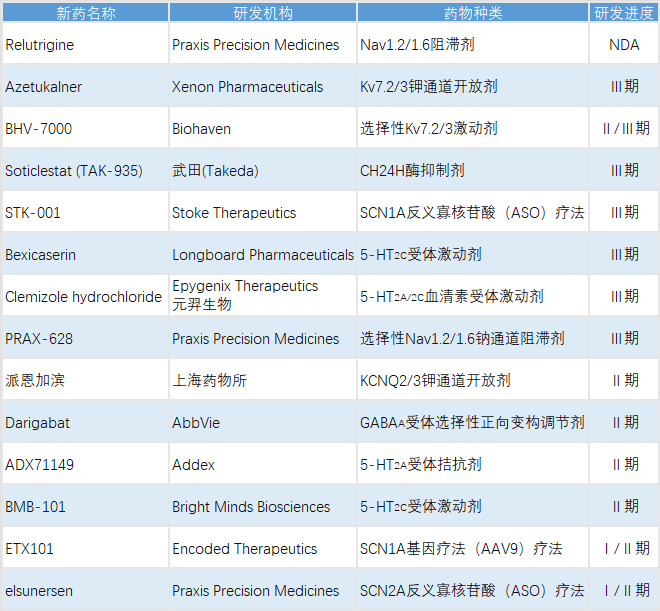
Progress of Selected Investigational Anti-Epileptic New Drugs
From Target Development Boom to Preclinical Empowerment
Kylin Lab specializes in preclinical CRO services for central nervous system (CNS) drug development and has built a comprehensive CNS drug research platform to date. The company has participated in multiple preclinical research programs for anti-epileptic agents, leveraging its mature R&D system to facilitate smooth clinical translation of candidate drugs and accumulating extensive practical expertise.
We have a full portfolio of well-validated epilepsy animal disease models and have established a multi-dimensional pharmacodynamic evaluation system covering behavioral assessment, biomarker testing, electrophysiology and more. We can deliver customized, end-to-end integrated technical solutions for anti-epileptic drug development, effectively improving the clinical translation rate of investigational drugs.

Kylin Lab
CNSxplore | Pioneering CNS Drug Discovery--In vitro and in vivo, Beyond limits
Kylin Lab is a preclinical CRO company specializing in central nervous system (CNS) diseases, dedicated to offering one stop solutions for CNS drug discovery. With a portfolio of fully-validated cellular and animal disease models, combined with comprehensive research and analytical capabilities, we empower clients to accelerate the development of innovative therapies and reduce clinical trial risks.
Kylin Lab boasts an experienced technical team well-versed in international regulations, along with high-standard experimental platforms. Our core technologies include AI-driven phenotypic screening, humanized stem cells and organoids, electrophysiology, high-throughput electroencephalography (EEG), histology, and molecular biology. Our expertise spans a broad range of areas including Alzheimer’s disease, Parkinson’s disease, depression, schizophrenia, spinal muscular atrophy (SMA), pain, and stroke etc.
Since its establishment, Kylin Lab has adhered to the philosophy of “Pioneering R&D, Leading in technology Quality-first, Customer-centric.” We have served hundreds of clients, successfully completed numerous thematic research projects and IND submissions, and established a high-quality, stable, and forward-looking efficacy evaluation system.